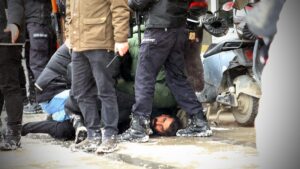

Forensic Medicine Specialist Dr. Nevin Küçükçallı stated that in protecting juvenile delinquents, the state must fulfill its obligations as well as its social and moral responsibilities, and that there should be centers that include restorative and therapeutic measures to remove children from the cycle of violence.
Image: psikolektif.com
In Turkey, the number of juvenile delinquents has been increasing day by day in recent years. According to 2024 data, the number of cases reported to security forces reached 612,000. It appears that groups referred to as “new generation gangs” primarily exploit children.
Dr. Nevin Küçükçallı, a Forensic Medicine Specialist and member of the Turkish Medical Association, stated that the preconceived notion that children involved in crime are “criminals” must be abandoned, adding, “Moreover, we must stand against the language used in the media regarding children, which dehumanizes them.”
Reminding the state of its responsibilities in protecting children, Küçükçallı noted that there are societal and moral responsibilities, and that society should not dehumanize children.
“Our primary goal should never be to punish children, but to consider their best interests and protect them,” said Dr. Nevin Küçükçallı, answering niha+’s questions regarding juvenile delinquents and related practices.
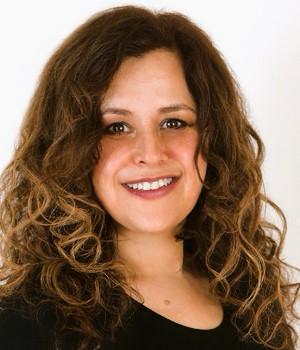
About Nevin Küçükçallı
A graduate of Dokuz Eylül University, she is a forensic medicine specialist and Assistant Professor specializing in human rights violations. Member of the Turkish Medical Association and the Society of Forensic Medicine Specialists.
I’d like to start with the question, “Who is a child?”
Every person is a child until the age of 18. Childhood is not a fixed moment, but an ongoing stage of development. Empathy, abstract thinking, and impulse control mature over time through genetic and environmental factors. Recent studies show that brain changes continue from pre-adolescence until the mid-twenties.
Do all children, for example, infants and adolescents, have the same rights and freedoms?
According to the 1989 United Nations Convention on the Rights of the Child, all children have certain rights and freedoms simply by virtue of being children, and states are obligated to protect children.
So, who is a juvenile delinquents?
According to the Child Protection Law, which came into effect in 2005, a child is one who is under investigation or prosecution, or against whom a security measure has been imposed, on the allegation of committing an act defined as a crime under the law. The Child Protection Law defines a child not as a criminal, but as one “drawn into crime” by risk factors.
Could you discuss risk factors for children? What are they?
Deep poverty and inequalities in social distribution are the biggest risk factors for these children. School dropouts and low educational levels or broken family structures, which lead to isolation, often result in these children becoming estranged. These children then encounter neighborhood cultures and criminal organizations where crime is seen as prestigious, as a means of self-affirmation. For children living on the outskirts of cities, violence is often seen as a survival mechanism.
Can we say that the darkness mentioned in the words of Rakel Dink, the spouse of journalist Hrant Dink, who was murdered by 17-year-old Ogün Samast – “Nothing can be done without questioning the darkness that creates a murderer from a baby, my brothers and sisters…” – is among the risk factors?
Absolutely! We are talking about a system where poverty is deepening, no policies are being produced to address the inequality in social distribution, even providing a free meal for children isn’t being discussed, social rights are constantly being curtailed, access to education and healthcare is becoming increasingly difficult, and marginalization and violence are glorified. Without addressing the root causes that led the child to commit the crime, will the law solve the problem simply by imposing a 24-year prison sentence?
“We need to talk about the responsibilities of the state”
We see more juveniles pushed into crime in the media than before. Are their numbers increasing? What are the commonalities and differences between children who come to security forces as victims and those involved in crime?
In 2024, the number of children brought to security forces was 612,000, an increase of approximately 10% compared to 2023. However, what is striking is that while approximately 202,000 of these children were alleged to have been involved in crime, 279,000 entered the system as victims. In other words, the vast majority of children entering the legal system are not perpetrators of crime (33%), but victims (45%). The victimized children are the dark side of crime. Another interesting point is that the most frequent reason for children in both groups entering the system is through injury. So the real problem is the increasing violence.
On the other hand, instead of talking about victimized children, finding solutions for them, investigating the causes of increasing violence, and calling on the state to fulfill its responsibilities in these matters, people prefer to talk about these children. Taking responsibility and finding solutions is more difficult; blaming is easier.
Meanwhile, there’s also an effort lately to create a perception that the punishments for juvenile delinquents should be increased.
“Age alone is not enough”
How are sentences determined for the juvenile delinquents?
Article 31 of the Turkish Penal Code governs the determination of criminal responsibility based on age. Under this law, children under 12 have no criminal responsibility and cannot be prosecuted under any circumstances. For children aged 12-15 involved in crime, a forensic medical evaluation is required. If the forensic medical evaluation determines that the child has significant intellectual disability or mental illness, no criminal prosecution is initiated. If the forensic medical evaluation determines that the child does not have significant intellectual disability or mental illness, and that their perception and ability to direct their behavior are developed, the child is generally given a reduced sentence by half. For children aged 15-18, a reduced sentence of one-third is given without a forensic medical evaluation.
But is age alone sufficient to determine the criminal responsibility of a juvenile delinquents?
No, age alone is not sufficient for determining criminal responsibility. The child must also have reached the psychosocial maturity to intellectually understand the moral and legal consequences of their actions and the rules of society, and to direct their behavior accordingly.
If forensic medical assessments were conducted properly, the conditions and traumas that led the child to crime could be identified, and the child could receive timely psychosocial intervention. However, based entirely on subjective assessments, mostly printed evaluations are made stating that the child does not have a psychopathology that would affect their criminal responsibility, and children are sent to prison environments.
Considering that children are not adults, sending them to prison is not a solution. So what needs to be done to solve this problem?
We need to get rid of the preconceived notion that children who are drawn into crime are “criminals.” Moreover, we must stand against the language used in the media regarding children, which dehumanizes them.
Children are not adults. Their physical and psychosocial development is still ongoing. Before this development is complete, a child cannot and should not be expected to assume the legal consequences like an adult.
Once a child enters the system, we can encounter them again later because when a child enters prison, their role models are the people in the prison, and the primary language spoken is violence. Violence is a language learned and produced through exposure. In other words, sending children to prison environments perpetuates the cycle of crime. Our primary goal should never be to punish children, but to safeguard their best interests and protect them.
In addition to the state’s obligations in protecting children, we also have social and moral responsibilities. Children should not be demonized by society and should not be left alone within the system. It is much more difficult for isolated children to escape the cycle of violence.
In conclusion, the solution is not to punish the child. The solution is to eliminate the causes that push children into crime. This includes implementing social policies to prevent poverty, improving the quality of education and schools, conducting detailed and high-quality forensic medical and social service assessments, preventing children from being held in prison conditions, and prioritizing restorative and therapeutic measures to help children escape the cycle of violence. All of these are necessary for the child’s well-being, the protection of their future, and rescuing them from darkness.
In the first five months of 2026, at least 303 children died in Turkey from preventable causes
The FISA Children’s Rights Center has published an information note titled “Violations of Children’s Right to Life in Turkey,” covering the period from January to May 2026. According to the note, which was prepared by reviewing data from local and national online media, local sources, and human rights organizations, at least 303 children lost their lives in Turkey in the first five months of the year due to preventable causes.
The study collected data on violations of children’s right to life in 69 provinces. As in previous years, the highest number of child deaths was recorded in Urfa with 18 children. Urfa was followed by Antalya with 16 child deaths, and Maraş and Istanbul with 14 child deaths each.
At least 46 children have lost their lives due to negligence in public services
According to the information note, at least 46 children lost their lives in incidents that occurred in public institutions and/or due to the direct actions and/or negligence of public officials. Of the children who lost their lives, 22 died while receiving health services, 20 while receiving education services, 2 while receiving care services, and 2 while benefiting from local government services.
The FISA Children’s Rights Center emphasized that this situation is the most serious consequence of public services not being structured according to children’s specific needs and of protective, child-centered mechanisms not being implemented.
At least 257 children have lost their lives as a result of violence, workplace accidents, and negligence.
The center stated that at least 257 children lost their lives due to the state’s failure to fulfill its obligations to regulate, supervise, and develop preventive policies. These deaths were classified under the headings of violence, workplace fatalities, neglect, and other violations of the right to life.
According to the report, in the first five months of the year, at least 26 children committed suicide, at least 8 children lost their lives in incidents related to individual gun ownership, and at least 14 children died under suspicious circumstances.
Drowning and falling from height are not being prevented.
According to the information note, at least 39 children lost their lives in urban and rural open spaces in the first five months of 2026. Of these children, 31 drowned in dams, rivers, open waters where necessary precautions were not taken, and mostly in irrigation canals belonging to the State Hydraulic Works (DSI).
Of the 11 children who lost their lives in domestic accidents, 8 died as a result of falling from open windows and balconies.
The FISA Child Rights Center stated that despite drowning and falls from heights occurring systematically every year, effective policies are not being implemented, necessary precautions are not being taken, and risks are not being eliminated. Therefore, the same reasons will continue to lead to child deaths in 2026.
Children are dying in workplace accidents: At least 27 children in five months.
According to the report, at least 27 children lost their lives in work-related accidents in the first five months of 2026.
Of the 21 child laborers who lost their lives while working, 11 died in agricultural and livestock jobs, 3 died from falls from heights in construction, and 1 died while working in the industrial sector. It was determined that at least 2 of the deceased children were working within the scope of MESEM (Vocational and Technical Education Center).
Six of the children who lost their lives in workplace accidents died in risky temporary shelters in cities where they had gone with their families, who were seasonal agricultural workers. It was noted that all of these children were refugees.
Violence: at home, school, streets…
In the first five months of 2026, at least 24 children lost their lives as a result of violence. Thirteen of these deaths were due to peer violence, six to gender-based violence, four to domestic violence, and one to child homicide. The FISA Children’s Rights Center stated that this data shows that violence is produced within children’s homes, neighborhoods, schools, and closest relationships.
The center included the following assessment in its statement:
“Each child death serves as a reminder that different forms of violence feed off each other, and that protecting children’s right to life is only possible by addressing the structural problems that generate violence and strengthening effective child protection mechanisms.”