
Criticism of censorship at the Istanbul Film Festival

When the queer film selection, which the organizers had announced would be included in this year’s program, will be once again excluded from this year. Filmmakers and cultural and arts workers renewed their call for a boycott.
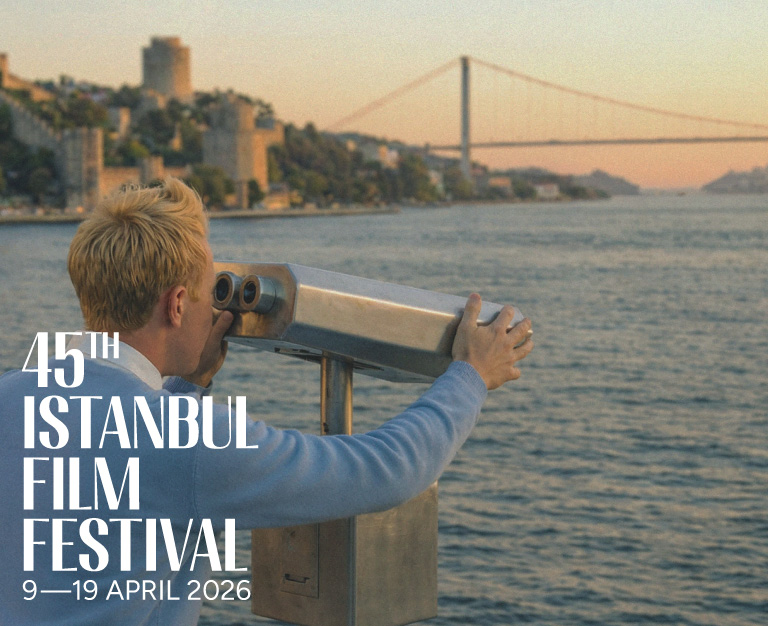
The program for the 45th Istanbul Film Festival organized by the Istanbul Foundation for Culture and Arts (İKSV), was announced.

In addition to three competitive sections—the Golden Tulip Competition, New Perspectives, and the Short Film Competition—the festival will feature six sections consisting of different thematic selections.

The “Neredesin Aşkım?” (“Where Are You, Love?”) section, dedicated to queer films, was not included in this year’s program either, despite statements made by the İKSV on social media following the censorship debates in 2025.

Filmmakers and cultural and artistic workers, who characterized this decision as “censorship,” expressed their outrage toward the İKSV and the festival management. The Istanbul Pride Week Committee has once again called for a boycott of the Istanbul Film Festival this year.

What happenned last year?

The decision to exclude the “Where Are You, Love?” section -which has been part of the festival since 2014 and showcases queer films- from the last year’s festival, had led to criticism from the LGBTQ+ community (such as, Pembe Hayat KuirFest) and certain artists, leading to calls for a boycott of the festival. Following the boycott calls, the festival stated in an Instagram post last year that it planned to include “Where Are You, Love?” in the program again the following year; which

Many artists point out that this decision is a clear act of censorship and is linked to the ruling government’s policies of oppression.

Comments on social media also highlighted that the festival’s decision was part of the Erdoğan government’s policies targeting the LGTBQ+ community under its “Year of the Family” campaign in Turkey.
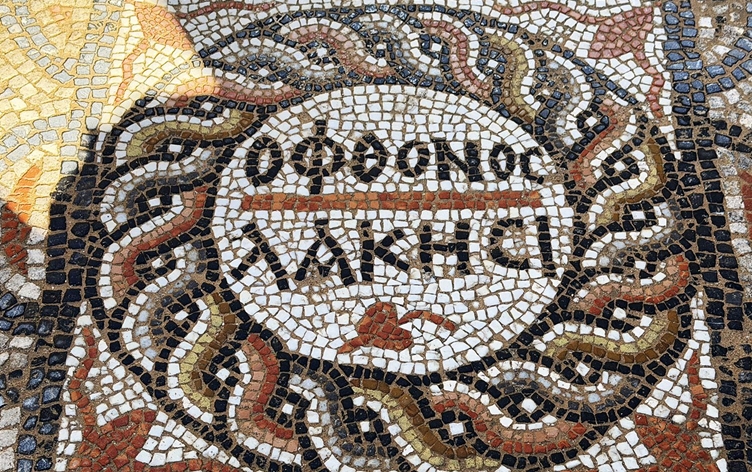

A 3,000-year-old mosaic says “Haters gonna hate”

Archeological excavations at the ancient city of Syedra in Antalya uncover a mosaic figure, with the inscription “Haters gonna hate”.

During archaeological excavations at the ancient city of Syedra in the Alanya district of Antalya, Turkey; a mosaic estimated approximately 15 square meters -believed to have been created between the 4th and 6th centuries A.D. and with the inscription “let the jealous burst”, roughly equivalent to “haters gonna hate”- had been discovered.

Excavations are being carried out under the Culture and Tourism Ministry’s Heritage for the Future Project, led by Associate Professor Ertuğ Ergürer.

Excavation Director Assoc. Prof. Dr. Ertuğ Ergürer told an Anadolu Agency (AA) journalist that they had made an important discovery during excavation work being carried out in one of the city’s largest residential structures, which dates back approximately 3,000 years.

The ancient city of Syedra, whose history dates back to the 9th century B.C., is located in the Alanya district of Antalya Province, Turkey, and is known to have been home to numerous empires.

Turkish phrase “Let the jealous burst” is on the mosaic

Noting that what makes the approximately 15-square-meter mosaic unique is the presence of two writings on it, “In the central part of the mosaic, there is an expression meaning something like ‘use it well.’ In the entrance door section of the room, there is a second inscription within a circular border. This inscription also has a somewhat metaphorical meaning. The first word in the inscription means ‘jealousy’ or ‘the jealous one,’ while the second word means ‘cracking’ or ‘bursting.’ It corresponds to the expression ‘may the jealous one burst,’ which we still use (in Turkish) today. Coming across such an expression in the entrance section of a structure built approximately 1,500 years ago was a huge surprise for us.” said Ergürer.

Ergürer explained the AA, that the northern section of the triple building has entrances to the second and third floors, “The structure, which has numerous rooms and a central courtyard in the middle, was in use from the 2nd to the 7th century A.D. During this period, the owners changed, new spaces were added, additional floors were built, and some sections were closed off. In later periods, the entrance area and the upper part of this mosaic-covered section were enclosed. The fact that the mosaic was covered has ensured that it has survived to the present day in such good condition,” he said.

Ergürer noted that they believe the construction to be one of Syedra’s significant residential structures and that excavation and restoration work will continue at certain points of the structure.

The archaeologists aim to uncover new evidence regarding daily life during the late Roman Empire and the early Byzantine period.

The voice of Palestinian resistance passed away

Ahmad Kaabour, the Lebanese artist whose music left an impressure on political and cultural memory amid the shadow of the Lebanese Civil War, has passed away.

Ahmad Kaabour, the Lebanese musician, composer, and actor who set the “Ounadikom” (I call to you) of Palestinian poet Tawfiq Ziad to music, passed away as his family announced on Thursday.

Kaabour, whose father was “Mahmoud Al Rashidi”, one of the first violin players in Lebanon, was born in Beirut in 1955. In the atmosphere of during the outbreak of Lebanese Civil War in 1975, in a city like Beirut that was constantly under attack, he composed and sang his first song “Ounadikom”, poem of the Palestinian poet Tawfiq Ziad.

In 1978, he enrolled in the Theater Department at the Institute of Fine Arts at the University of Lebanon and graduated with a degree in theater.

Kaabour established people’s committees to support his fellow citizens during the Civil War. In this atmosphere of resistance that he gifted the world with his most enduring legacy, “Ounadikom”. While songs like “They Called Me a Refugee”, “Pulse of the West Bank”, and “O Lovers of the Land, Come Forth” gave voice to the resistance of victims of war and displacement.

Throughout his career, Kaabour produced works dedicated to Palestine and the Palestinian cause.

Musical and theatral performances

Starting from 1975, Ahmad Kaabour revived hundreds of concerts and theatres in cultural, educational, and social committees. He is also known by his works of children’s theatre, such as “Lebanese Puppet Theater”. Kaabour also stood out in his acting career, portraying Wadih Haddad, one of the leaders of the Popular Front for the Liberation of Palestine (PFLP), in the film “Carlos”.

According to the information on his website, he performed musical shows in many Lebanese and international festivals, including the Beiteddine Festival, Anjar, Beirut. He also took performances on programs like Future TV.

He also performed concerts lately, titled “Peace to the Children of Gaza” at Beirut Arab University in 2023 and “Gaza’s Sounds of Resistance” at the Al Balad Theater in 2025.

His works; included the themes of resistance, Palestinian tragedy, forced displacement, war, exile, identity, and loss, still carry the mourning and resistance across generations.

Privacy overview

Niha+ respects your digital footprint within the framework of independent journalism principles and reader privacy. While browsing our site, cookies are used to provide you with an uninterrupted reading experience and to secure the technical infrastructure of our platform. You can manage your cookie preferences as you wish by using the menu on the left. For detailed information on how your personal data is processed, please review our Privacy Agreement and KVKK Clarification Text.