
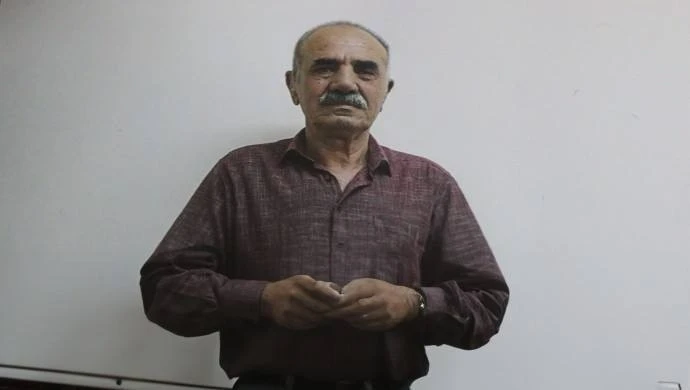
Mehmet Ekim Çam, who was included on the Human Rights Association’s list of seriously ill prisoners, has been released from the prison.
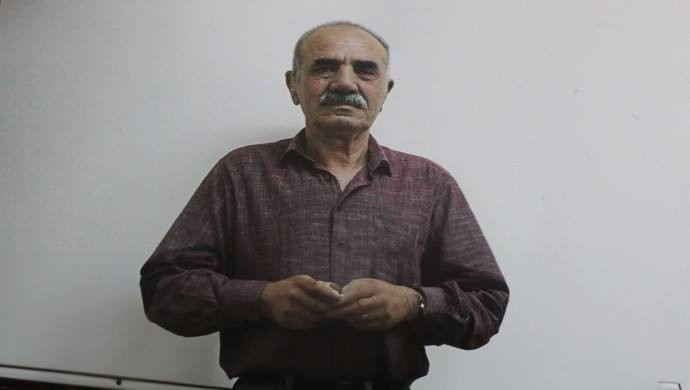
74-year-old seriously ill prisoner Mehmet Ekim Çam has been released from the Batman Type T Closed Prison where he was being held. It was learned that Çam had been referred to the Council of Forensic Medicine (ATK) three days ago.
Mehmet Emin Çam was arrested on December 12, 2012, while serving as the Siirt Co-Chair of the Peace and Democracy Party (BDP). He was released after 10 months, but was re-arrested in 2022.
In an urgent call published on March 26, the Human Rights Association (İHD) reported that Çam had been taken to Batman Training and Research Hospital on March 25, 2026. According to the information shared by İHD, Çam has a tumor on the right side of his brain, suffers from kidney disease, and has advanced heart disease. İHD also stated that Çam had suffered two heart attacks in prison, undergone two kidney surgeries, has paralysis in his left arm and left leg, and has blockages in five veins. Despite all these conditions, the Council of Forensic Medicine issued a report on December 3, 2025 stating that he was “fit to remain in prison,” and his requests for sentence postponement were rejected on March 10.
İHD emphasized that this situation constitutes a violation of Article 2 (right to life) and Article 3 (prohibition of torture and inhuman or degrading treatment) of the European Convention on Human Rights.
Number of ill prisoners in 2025
According to the İHD 2025 Report on Ill Prisoners, there are at least 1,412 ill prisoners in prisons across Turkey, including 161 women and 1,251 men. The report states that 335 prisoners are in serious condition.
Among them, 230 are unable to sustain their lives independently, and 105 require assistance. Additionally, 188 prisoners need continuous medical monitoring due to their illnesses.
The report also highlights that ill prisoners are not taken to infirmaries in a timely manner, face months-long delays in referrals to tertiary healthcare services, and are forced to live under inadequate conditions in terms of nutrition, heating, and hygiene.