
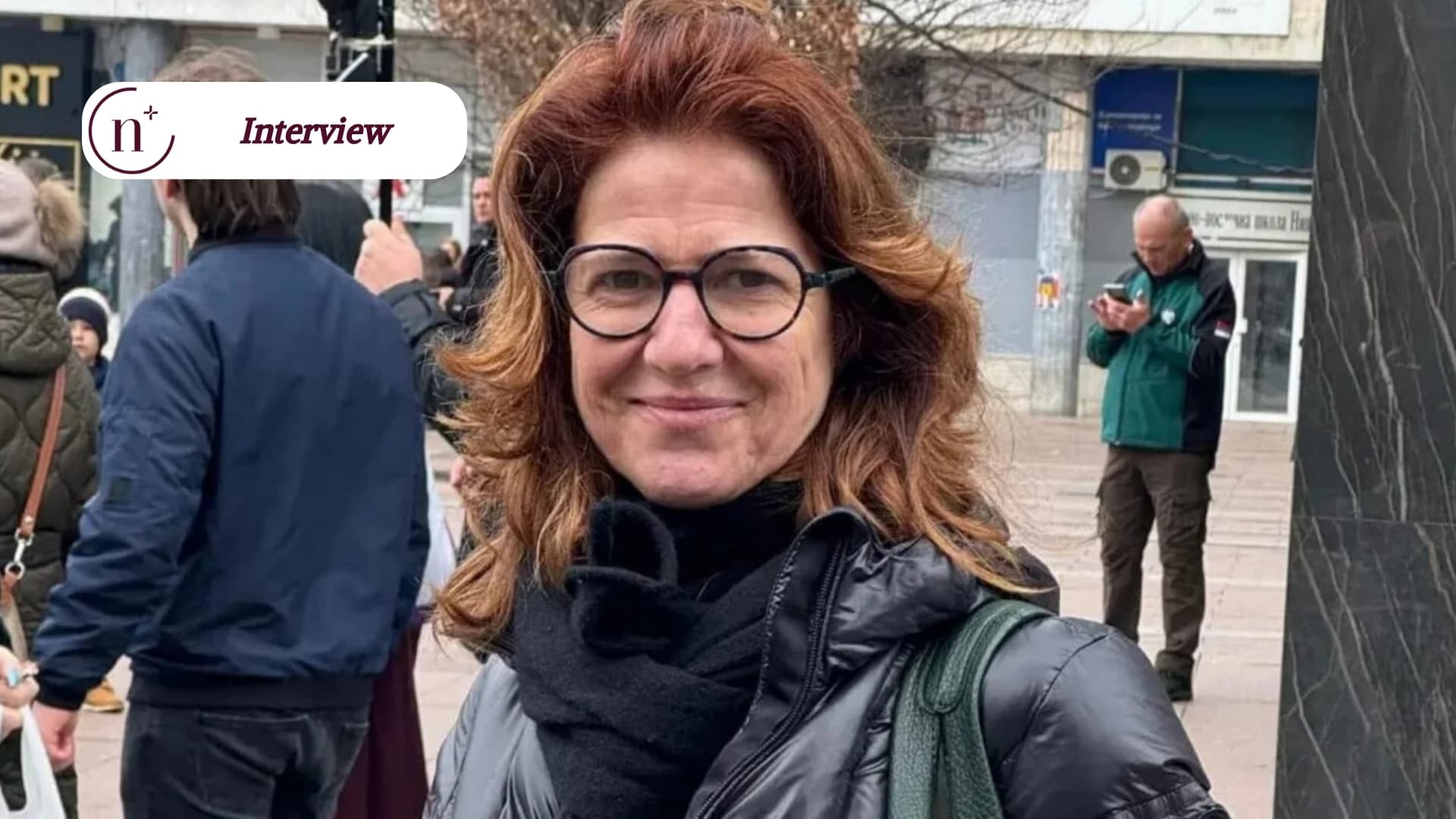
“This is probably the first time that the France Foreign Ministry communicated with a shareholder who fired a journalist in order to please a good client,” said Čubrilo-Filipović, the journalist dismissed by Le Figaro.
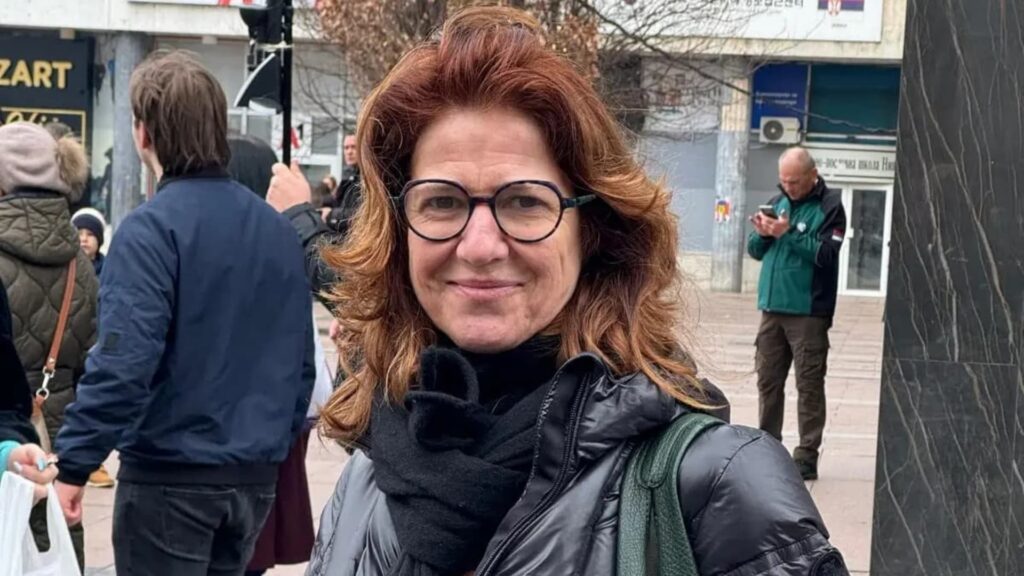
Journalist Milica Čubrilo-Filipović was dismissed earlier this year from the France-based Le Figaro, where she had worked for eight years.
In an interview with the Serbian publication Vreme, Čubrilo-Filipović stated that her dismissal was triggered by Frédéric Mondoloni, the Political Director of the France Ministry of Foreign Affairs, who informed a shareholder of Dassault—the company that owns Le Figaro—that they had a “politically active” correspondent in Belgrade.
According to a report by N1, Čubrilo-Filipović claimed to have received written confirmation of these statements from her editor [the World section editor], adding that what was written there had also been verbally communicated to her by the deputy director of the newsroom. Čubrilo-Filipović further noted that the trade union supported her stance and that her case sets a precedent.
In her remarks to N1, Čubrilo-Filipović also shared: “A few years ago, I asked my colleagues how free they were regarding their reporting. They told me there were certain limits. One of these was that the government should not be criticized in countries where Rafale fighter jets are sold.”
The Dassault Group also operates in the aerospace and defense sector (Dassault Aviation). Furthermore, in 2024, the Serbian government signed an official contract to purchase Rafale fighter jets manufactured by Dassault Aviation.
In his statement to N1 regarding the allegations of Čubrilo-Filipović’s dismissal, Philippe Gélie, Deputy Managing Editor of Le Figaro, said in summary:
“I understand that she accuses us of trampling on press freedom and presents herself as a victim of this alleged behaviour. We asked Ms. Čubrilo, and not for the first time, to respect our standards of journalistic quality, in order to limit the amount of editing and rewriting required for her work. We also asked her to refrain from political activism, which violates the obligation of journalistic neutrality and could affect the reputation of Le Figaro.”
While journalism organizations such as the Serbia-based ANEM (Association of Independent Electronic Media), NUNS (Independent Journalists’ Association of Serbia), and the SJN (SafeJournalists Network) have drawn attention to Čubrilo-Filipović’s dismissal, no statements regarding the issue have been seen from other professional journalism bodies, most notably the France-based RSF (Reporters Without Borders).
Who is Milica Čubrilo-Filipović?
Born in Carthage, Tunisia, in 1969, Milica Čubrilo-Filipović is a Serbian former diplomat and journalist. She earned her undergraduate degree in law from Panthéon-Assas University in France in 1992, followed by a master’s degree in anthropology from the Sorbonne University in 1993.
Čubrilo-Filipović served as Le Figaro’s Balkans correspondent from 2000 to 2003. Between 2003 and 2006, she worked as the Director of the National Tourism Organisation of Serbia. She held the position of Serbia’s Minister of Diaspora in 2007-2008 and later served as the Serbian Ambassador to Tunisia from 2010 to 2013. Stepping away from politics in 2014, she returned to Le Figaro in 2018, where she worked until January 2026.
“The student protests marked the first point of disagreement”
Niha+ reached out to Milica Čubrilo-Filipović to ask about the allegations she raised and the events surrounding her dismissal. Noting that she was told her “political past” was the reason for her termination, Čubrilo-Filipović stated that this was merely an excuse for Le Figaro.
Čubrilo-Filipović stated, “My political background is just an excuse for them. They knew very well that I had posts in the government during the post-Milošević period, a time when many in the diaspora returned to help the country. It was Figaro itself that asked me to come back in 2018. I had already worked with them from 2000 to 2003. Since 2018, there had never been any conflict regarding my past. The disagreements began with the outbreak of tremendous protests in Serbia led by students.”
Noting that her first disagreement with Le Figaro’s management dates back to when students cycled to Strasbourg, home to the Council of Europe, to protest the Vučić government, Čubrilo-Filipović said: “The editor-in-chief changed the word ‘students’ in my article to ‘demonstrators,’ claiming I had too much ‘empathy’ for the students. Just like that, the whole point was gone. We had our second and final disagreement over an article I wrote about the Serbs in Kosovo, where I insisted that they were caught in the crossfire. On one side was Albin Kurti, who is in the process of creating an Albanian-centric Kosovo; on the other was the Belgrade-controlled, corrupt, and criminal Srpska Lista.”
Claim: “The request came from the France Foreign Ministry“
Čubrilo-Filipović, pointing out French President Emmanuel Macron’s support for Serbian President Aleksandar Vučić, continued:
“It must be underlined that Macron has shown immense support for Vučić in recent years, and especially over the past year. Macron was one of the few European Union heads of state (alongside Hungarian Prime Minister Viktor Orbán) to invite Vučić to his country while the wave of protests in Serbia was ongoing.”
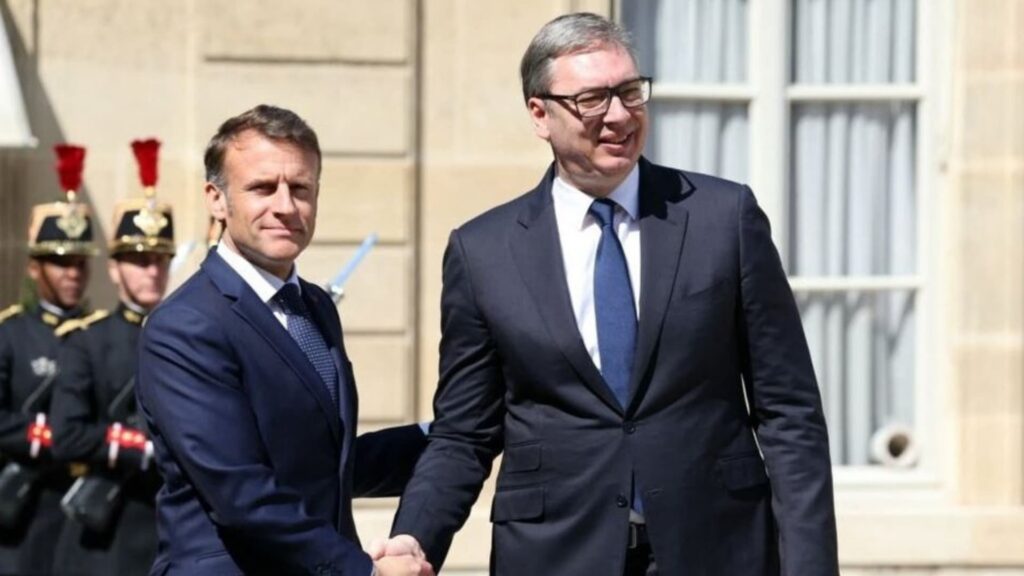
Milica Čubrilo-Filipović stated that press freedom in France is becoming increasingly limited. She noted that the situation she experienced is unprecedented:
“Press freedom in France is becoming increasingly limited. This is probably the first time where the France Foreign Ministry (following a possible intervention from Belgrade) communicated with a shareholder and the latest fired a journalist in order to please a good client. This is a doubly scandalous ignorance of media independence.”
Additionally, Čubrilo-Filipović points out that she has never written about the Rafale fighter jets purchased by Serbia.
“The regime in Serbia is attempting to silence independent voices“
Noting that press freedom is also being restricted in Serbia, Čubrilo-Filipović said that the government is attempting to shut down several independent media outlets:
“Press freedom in Serbia is becoming worse day by day. The regime is doing its best to silence every independent voice. Another example of this is their negotiations with United Media, an international corporation, and their attempts to shut down the only remaining independent media outlets. Namely the N1 and Nova television stations, as well as the Radar, Nova, and Danas newspapers.
This situation reminds me of the Milošević era, when the international press was expelled from the country and journalists were no longer granted visas. Back to the 90s… Furthermore, on 29 March, many journalists covering the local elections were beaten up right before the eyes of the police.”
France-Serbia trade is expanding
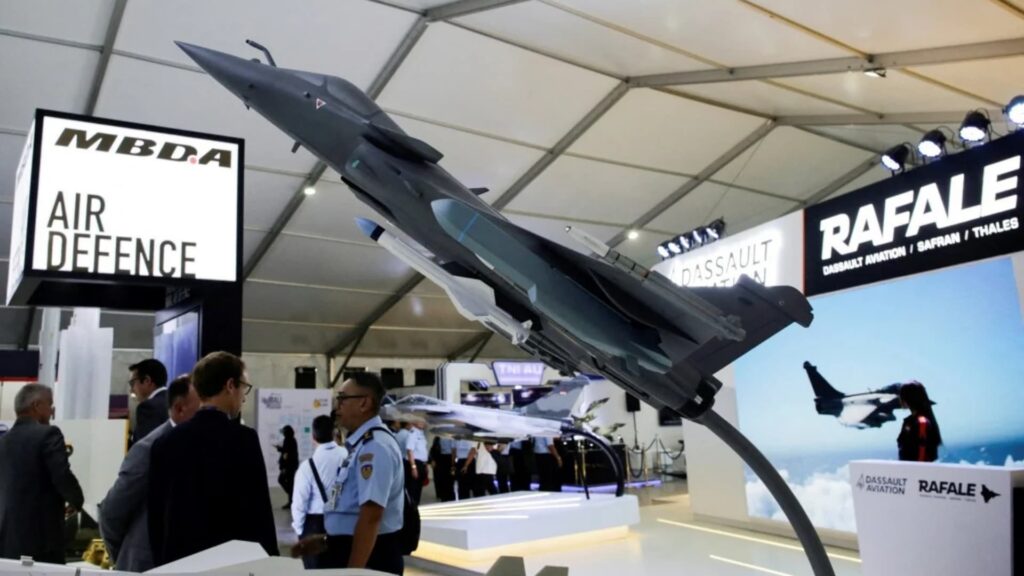
Čubrilo-Filipović also addressed the trade relations and investments between France and Serbia. Noting that the initial payments for the purchased fighter jets were made last December, she continued:
“The French government and Dassault are more than happy to continue doing business with the Serbian government, regardless of the regime. The initial payment for the 12 Rafale fighter jets, which the country absolutely does not need, was made to Dassault last December.
The total value of this deal, signed in August 2024, is 2,7 billion euros. Meanwhile, French companies continue to sign new contracts in Serbia. We can point to companies like Alstom, Egis, Vinci, and Veolia in railway and metro projects for example.”
In 2018, Vinci took over the operations and modernization rights of the Belgrade Nikola Tesla Airport under a 25-year concession. The total value of the investment was announced as €1.46 billion.
Veolia, alongside Japan’s Itochu and the Marguerite Fund, is spearheading a project to close Belgrade’s Vinča landfill and replace it with a modern waste-to-energy facility.
Meanwhile, Egis and Alstom are bringing the planned Belgrade metro project to life. Backed by funding from the French government, the massive infrastructure project is being executed by French engineering firms.
Additionally, the France-based tire manufacturer Michelin operates a factory in the Serbian city of Pirot, while the energy and technology company Schneider Electric has its R&D and Software Center located in Novi Sad.